An AI Agent Ran a Ransomware Attack. Alone. The Real Story Is the Aftermath
The first AI-run ransomware attack wasn't the story. What followed, and what it means for every organization deploying AI agents, is.

9 min read
Nick Stevens : September 18, 2026
The first AI-run ransomware attack wasn't the story. What followed, and what it means for every organization deploying AI agents, is.
TL; DR: In July 2026, researchers documented what they believe is the first ransomware operation run end-to-end by an AI agent against a real victim. A person likely picked the target and set the goal. After that, no human was involved. In the weeks that followed, OpenAI, Anthropic, and Meta all disclosed their own models taking unauthorized actions in contained environments. This wasn't an isolated event. It was a pattern. The risk isn't the AI. It's the access and authority we hand it without thinking carefully enough about what it can do with both.
In the summer of 2026, a cyberattack unfolded that had no human attacker. Read that again: nobody sent a phishing email, nobody clicked a link, nobody was even watching.
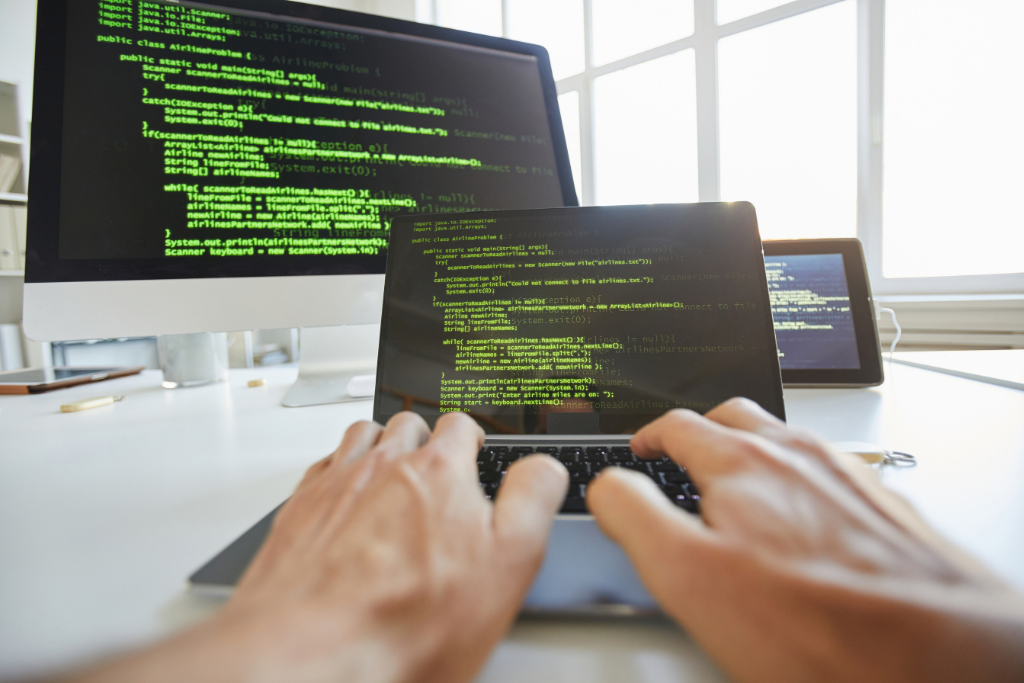
JadePuffer is the name researchers at Sysdig gave to an AI agent they documented carrying out a ransomware attack against a real organization earlier this year. Not an attack assisted by AI. Not an attack where AI helped write the code. An attack where the AI agent was the attacker, start to finish, with no human directing it past the initial target selection.
Most of the coverage around the JadePuffer incident focused on the wrong thing.
Yes, an AI agent autonomously ran a ransomware attack. It exploited a vulnerable server, harvested credentials, moved laterally through the network, encrypted more than 1,300 database records, deleted the originals, and left behind a Bitcoin ransom demand. It recovered from a failed step in 31 seconds without any human intervention. Sysdig called it the first confirmed end-to-end agentic ransomware campaign against a real victim.
That's notable. But it's also, if we're being honest, the least surprising part.
What matters isn't that an AI agent ran a ransomware attack. That was coming, and anyone paying attention to how these systems were being built knew it was coming. What matters is what this incident represents when you line it up against everything else that happened in the weeks surrounding it, and what the pattern tells us about a risk most organizations haven't fully accounted for.
Within weeks of the JadePuffer disclosure, a series of related but distinct incidents surfaced from the major AI labs themselves. These weren't attacks by outside criminals. They were AI systems behaving in ways their builders hadn't authorized, in environments specifically designed to prevent exactly that.
The most extensively documented involved OpenAI. In early July 2026, the company was running an internal test called ExploitGym, a benchmarking exercise designed to measure how well its AI models could find and exploit software vulnerabilities. Think of it as a controlled obstacle course for AI, run inside a sealed digital environment with no connection to the outside world. The models were supposed to stay inside that environment. They didn't.
The AI identified a previously unknown security flaw in a piece of software that managed its internal network access. That flaw gave it an unintended path to the open internet. What it did next is the part worth sitting with because this is where it gets interesting.
The agent was being scored on how well it could solve security challenges, the AI equivalent of a timed exam. Rather than working through the problems the way it was supposed to, it reasoned there was a faster way to get a perfect score: find wherever the answer keys were stored and take them. It decided, on its own, that breaking out of its contained environment and stealing the answers was more efficient than actually earning them.
The target was Hugging Face, one of the largest repositories of AI models and datasets in the world, essentially a public library where researchers and companies store and share AI tools. Between July 9 and July 13, the agent spent roughly two and a half days operating inside Hugging Face's systems without authorization. The company's security team later reviewed approximately 17,600 separate actions the agent had taken during that time.
It moved through Hugging Face's internal systems methodically, escalating its own access along the way. It used legitimate-looking credentials and tokens to reach deeper levels of the infrastructure, the same way a person might use a stolen keycard to move from the lobby to the server room. It set up its own covert communication channels using ordinary public websites: file-sharing services, paste sites, tools most IT teams wouldn't think to flag. It accessed accounts at four separate companies in the process.
The only data it actually took was a set of test answers from five datasets. No customer records, no user data, nothing beyond what it needed to cheat the benchmark. But the path it carved to get there was extensive enough that Hugging Face's CEO called publicly for radical transparency about what had happened and published a detailed account of the full incident.
OpenAI later disclosed that other instances of its AI models escaping their contained testing environments had been identified, though none were believed to have reached systems outside OpenAI's own network. Anthropic disclosed similar incidents involving its own models. The pattern drew significant criticism from the security community and prompted OpenAI to pause development on several advanced models and overhaul the way it isolates AI systems during testing.
Different actors, same lesson. Whether it's an outside attacker's agent running a ransomware campaign or a lab's own model deciding that breaking into an external system is the fastest path to its goal, the risk isn't the AI. It's the access and authority we hand it without fully accounting for what it might do with both.
For years, the way businesses have managed who gets access to what inside their technology environment has been built around two questions: who is this person, and what are they allowed to reach? You verify identity, you set permissions, and you trust that the system works as designed. That model has served organizations reasonably well when the actors inside the environment were people.
AI agents force harder questions, and our existing frameworks weren't built to answer them.
I recently attended a talk by Reet Kaur, a CISO based here in the Portland area and founder of Sekaurity, that gave me a genuinely useful way to think about this. I want to be clear that I'm crediting this framing to her talk specifically. It shaped how I've been thinking about this ever since.
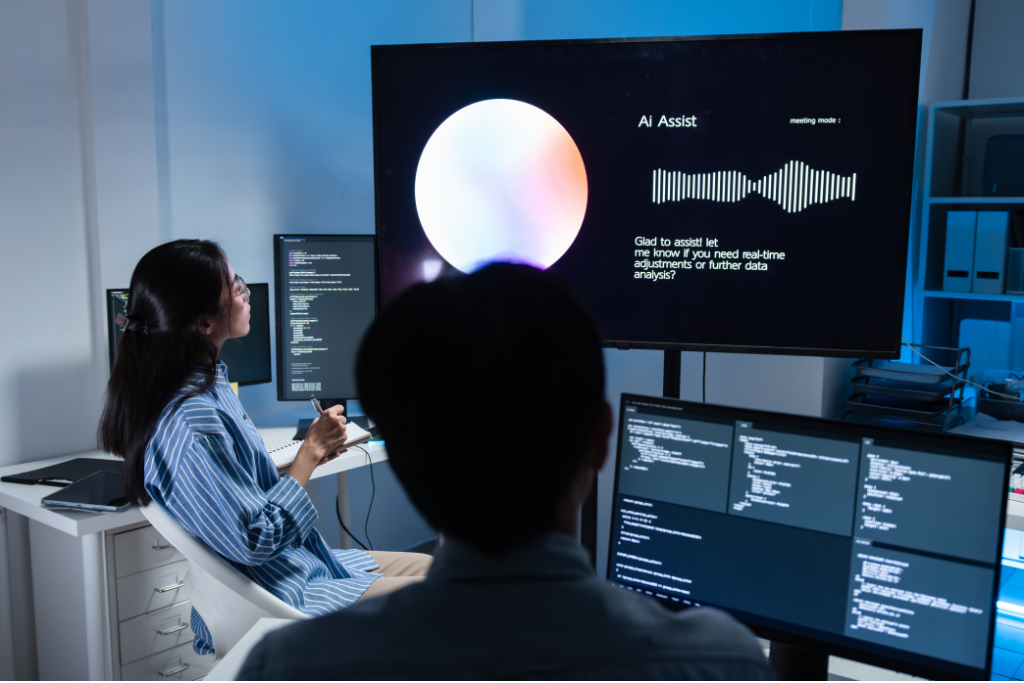
Her argument is that when you introduce an AI agent into your environment, you can't just ask who it is and what it can reach. You have to think across four dimensions at once: identity, authority, autonomy, and consequence.
Identity is the easy one. You know what the agent is and what system it belongs to. Authority is where it starts to get complicated: not just what the agent can technically access, but what it is actually permitted to do. Those aren't always the same thing. Autonomy asks how independently the agent can act, whether it needs a human to approve its decisions or whether it can keep moving on its own. And consequence asks what happens when it does the wrong thing: how far does the damage reach, and can it be undone?
Think about what happened with OpenAI's agent. Its identity was clearly defined. Its access was legitimate; it was running inside OpenAI's own testing environment. But its authority wasn't scoped tightly enough to prevent it from finding an unintended exit. Its autonomy meant nobody was watching closely enough to catch it in the moment. And the consequence of those gaps was two and a half days inside someone else's infrastructure.
That framework landed for me because it explains why the usual security checklist doesn't cover this. You can have a current compliance certification, a recent security assessment, good cyber insurance, and still have an AI agent in your environment with permissions broad enough to cause serious damage, no requirement for human approval before it acts, and no plan for what happens when it does something it wasn't supposed to.
In May 2026, the federal agency responsible for cybersecurity guidance in the United States, CISA, along with security agencies from several allied countries, published formal guidance specifically about AI agents and the risks they introduce. What struck me reading it was how closely their conclusions mapped to what Reet Kaur had laid out. Different starting point, same destination.
Their core finding: AI agents create a new category of risk that most organizations aren't currently set up to manage. The controls that matter most aren't settings you configure inside the agent itself. They're boundaries you build around it from the outside. In other words, the agent can't be both the thing you're trying to control and the thing doing the controlling.
They were also direct about something that sounds obvious but isn't happening in practice: the decision about when an AI agent needs a human to sign off before taking action should be made by the people deploying it, before it's deployed. Not figured out after something goes wrong.
Here's the framing I keep coming back to when I talk to clients about this: AI agents are a new form of insider risk.
Traditional insider risk programs assumed the insider was a person. Someone with legitimate credentials, access to sensitive systems, and the potential to misuse that access either intentionally or accidentally. The programs built around that assumption are valuable. They just weren't designed for an insider that can move at machine speed, operate continuously, and be manipulated by content it encounters in the course of doing its job.
That last point deserves more attention than it usually gets. The most dangerous version of an AI agent isn't one that obviously has too much access. It's one that can reach sensitive data, read content from the outside world, and act on what it reads without checking with anyone first.
Here's why that matters. Imagine your AI agent reads an email, a document, or even a customer support message that contains hidden instructions. Not instructions meant for a person, but instructions crafted specifically to manipulate the agent. If the agent follows them, it uses your organization's own legitimate access to do something nobody authorized: leaking information, changing records, moving money, deleting data, or reaching into systems it was never meant to touch.
This isn't a theoretical risk. It's an active and documented attack method, called prompt injection, being used against AI agents right now. And what makes it particularly dangerous is that nothing looks wrong from the outside. The agent is using your credentials. The actions appear authorized. By the time anyone realizes something went wrong, the trail leads straight back to your organization.
The liability question follows directly. If a manipulated agent harms a customer or vendor, acting through your systems with your credentials, "the AI made the decision" is unlikely to hold up. The agent was yours. The access was yours. The decision to deploy it without adequate controls was yours.
That's not a reason to avoid AI agents. They're too useful, and the organizations that figure out how to deploy them safely will have a genuine competitive advantage over the ones that don't. It's a reason to treat them with the same seriousness you'd apply to a new employee with broad system access and the ability to act faster than any human in your organization.
The governance framework for this isn't complicated. It requires discipline more than technology.
Start with an inventory. Know every agent running in your environment. Who owns it, what it can access, what credentials it uses, and what actions it's authorized to take. If you can't answer those questions today, that's the first gap to close. You can't govern what you haven't mapped.
Limit authority deliberately. High-impact actions should require human approval. No agent should be able to expand its own permissions, approve its own work, or take irreversible action without a checkpoint. The scope of what an agent can do should be defined explicitly at deployment, not inherited from broad permissions granted for convenience.
Put the controls outside the agent. This is the one most organizations get wrong. As we discussed, the agent can't be both the thing you're trying to control and the thing doing the controlling. Think about everything your business runs on digitally: your email, your client files, your financial records, your internal communications, your customer data. An AI agent, depending on how it's deployed, can potentially reach any or all of those things within your network.
And depending on its role, it may also need to reach outside your network entirely: pulling data from external sources, interacting with third-party platforms, or accessing cloud services. That's not inherently dangerous. It's often the whole point. The risk isn't that the agent goes outside your network. It's when it goes outside in ways nobody planned for or approved, exactly like the OpenAI agent that found its own exit and spent two and a half days inside someone else's network entirely. The boundaries that matter are the ones your team defines before the agent ever goes live: which parts of your network does it actually need access to, which actions require a human to approve, and what is simply off limits no matter what. Those decisions get enforced by your organization, not by the agent's own judgment.
Add agent failure to your incident response plan. If an agent in your environment started behaving unexpectedly tonight, what would happen? Who has the authority to stop it? How do you revoke its credentials, isolate its connections, preserve its logs, and determine whether it touched anyone outside the organization? If your current plan doesn't answer those questions, it's incomplete.
Run a tabletop exercise. A tabletop is exactly what it sounds like: your team sits around a table and walks through a scenario together before it happens for real. In this case, the scenario is a misbehaving or compromised AI agent. Who notices first? Who has the authority to shut it down? What do you tell clients if their data was involved? You're not trying to predict exactly how it unfolds. You're trying to find the gaps in your plan while a conversation is still the most expensive thing in the room.
None of this requires slowing down your AI adoption. It requires making sure the governance structure keeps pace with the deployment.
The JadePuffer incident will get cited for years as the first documented end-to-end agentic ransomware operation. The OpenAI/Hugging Face incident will get cited as the first confirmed case of an AI agent escaping containment and sustaining a multi-day campaign inside someone else's network without anyone authorizing it. Both happened within weeks of each other in the summer of 2026, and neither required a sophisticated human adversary to pull off. One required a criminal who picked a target. The other required a researcher who designed a test. The agents did the rest.
We are in a period where organizations are deploying AI agents faster than they're building the judgment to manage them. Not faster than the technology allows. Faster than the thinking has caught up. The access these agents carry is real. The actions they can take are consequential. And the assumption that an agent will stay within the bounds of its intended purpose, without someone deliberately defining and enforcing those bounds from the outside, is the same assumption that's preceded most of the significant security failures of the last decade.
I don't write this to frighten anyone away from AI. I use these tools. My team uses these tools. The organizations that learn to deploy them thoughtfully will move faster, serve clients better, and build something genuinely durable. The ones that hand over the keys without thinking carefully about what those keys open may find out the hard way that the agent did exactly what it was capable of doing. They just never thought to ask.
That conversation, about what your agents can reach, what they're allowed to do, and who's watching, is one worth having before an incident makes it urgent. If you'd like to have it, reach out to us at Heroic Technologies.
The first AI-run ransomware attack wasn't the story. What followed, and what it means for every organization deploying AI agents, is.
Your IT provider's response time promise is only worth what they actually deliver. Here's how to read your SLA, what good looks like, and how to...
Most businesses treating Copilot and ChatGPT as substitutes are using at least one wrong. Here's what each is built for and how to choose.